
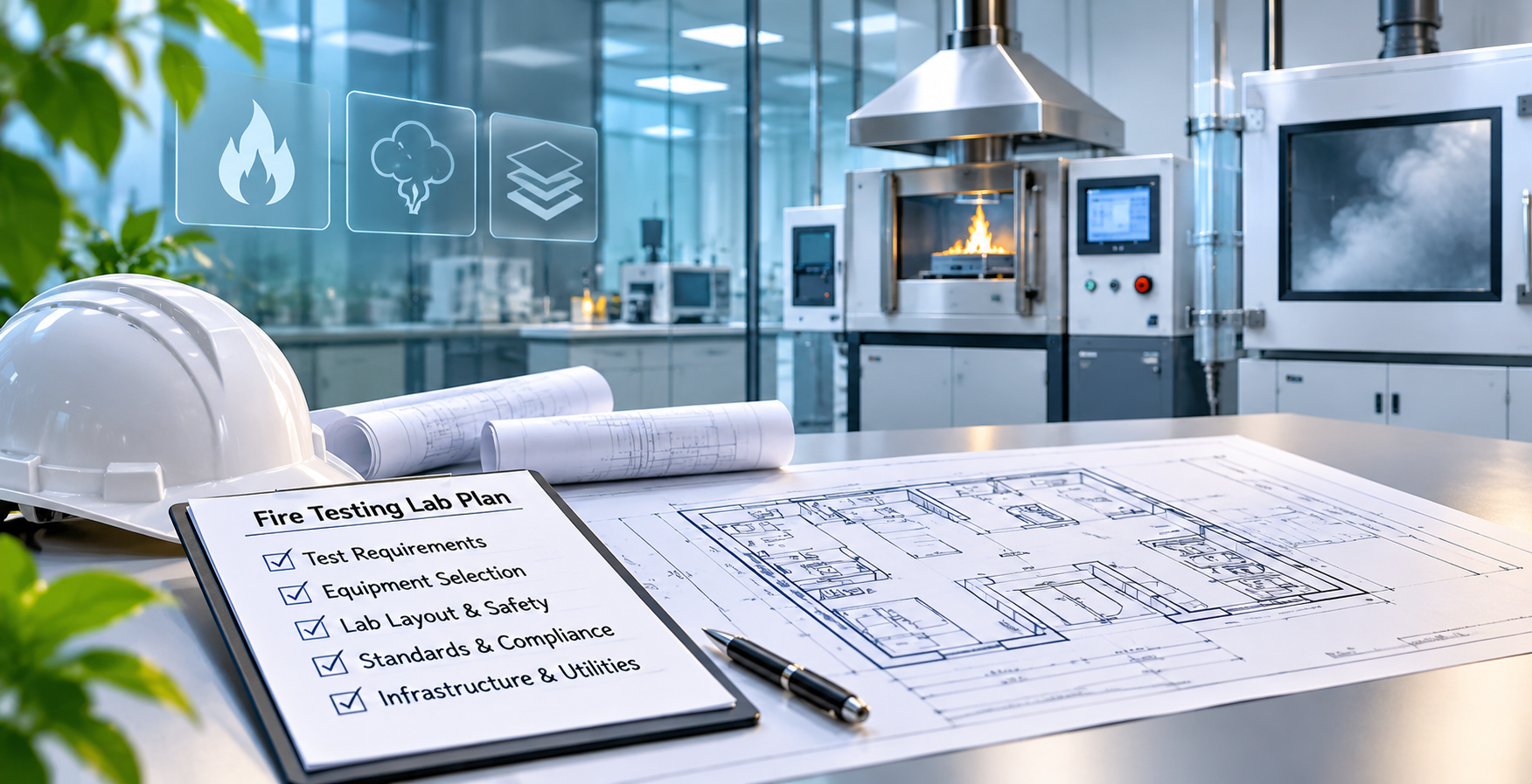

A practical guide to defining your laboratory’s needs before investing in fire testing equipment.
DNG TECHNO | BLOG DRAFT
Setting up a fire testing laboratory is a significant investment. It involves more than selecting instruments from a catalogue. The equipment you choose will shape the tests you can perform, the materials you can evaluate and the way your laboratory supports product development, quality assurance or research.
A common starting point is to ask, “Which equipment should we buy?” A more useful first question is, “What do we need to test, and what do we need those tests to tell us?”
Starting with the testing requirements helps you plan a laboratory that is fit for purpose, makes better use of the available budget and can support your organisation’s needs as they evolve.
1. Understand the materials and products you will test
Begin by identifying the materials, components or finished products your laboratory is expected to evaluate. These might include plastics, cables and wires, construction materials, textiles, composites or components used in transportation and other industrial applications.
Different materials and end uses raise different testing questions. A test that is relevant for one material or application may not be the right choice for another. Defining the likely sample types, dimensions, forms and intended use cases gives you a clearer basis for deciding which testing capabilities are required.
2. Identify the applicable test methods and standards
Once the materials and applications are clear, identify the test methods and standards relevant to your work. Customer specifications, industry requirements, internal quality procedures and regulatory frameworks may all influence the tests a laboratory needs to perform.
It is important to distinguish between a test method, the equipment used to carry it out and the purpose for which the result will be used. For example, different fire testing methods examine different aspects of material behaviour. No single test should be assumed to provide a complete picture of fire performance or establish compliance for every application.
Where requirements are unclear, involve the relevant technical, quality or regulatory specialists before finalising the equipment list. Confirm the current edition and applicability of each standard with the responsible technical team.
3. Decide which tests should be conducted in-house
Not every organisation needs to bring every testing capability in-house from day one. Consider which tests are needed frequently, which are central to product development or quality control, and which may be more practical to outsource to an external laboratory.
An in-house laboratory may offer greater control over scheduling, quicker feedback during development and closer integration with production or research teams. Outsourcing may be appropriate for infrequent tests, specialised capabilities or situations where the investment and ongoing operating requirements cannot yet be justified.
A phased approach can also work: establish the most important capabilities first, then expand as testing volume, business needs and technical resources grow.
4. Plan the laboratory environment and infrastructure
Equipment selection should take place alongside infrastructure planning. Depending on the test methods and instruments involved, a laboratory may need specific space, ventilation, exhaust arrangements, utilities, environmental controls, safety provisions, sample preparation areas or other site requirements.
These requirements can affect layout, installation timelines and the total project budget. Reviewing them early helps avoid the situation where equipment has been selected or purchased but the laboratory is not ready to install or operate it.
Ask suppliers for the relevant installation and site-preparation requirements for each proposed instrument, and have the laboratory’s technical and facilities teams review them before purchase.
5. Look beyond the initial equipment price
The purchase price is only one part of the investment. A realistic budget should also consider installation, commissioning, accessories, consumables, calibration, maintenance, training, repairs and the availability of spare parts.
The cost and availability of ongoing support can influence how consistently a laboratory operates. A lower initial price may not represent the best overall value if the equipment is difficult to maintain, support is limited or essential requirements have been overlooked.
When comparing options, assess the equipment against the test requirements and consider the support available throughout its working life.
6. Consider the people who will operate the equipment
A laboratory depends on more than instruments. It also depends on people who understand the test methods, can operate the equipment correctly, follow documented procedures and interpret results within the appropriate technical context.
Plan for operator training, method familiarisation, documentation and the time needed to establish consistent laboratory practices. If several teams will use the equipment, consider how responsibilities, access and training will be managed.
7. Build in room for future requirements
Laboratory needs can change as product lines expand, customer specifications evolve or new markets and applications become important. A plan that addresses only today’s requirements may limit the laboratory later.
Consider expected testing volumes, likely new materials, additional test methods and whether the laboratory layout or infrastructure can accommodate future equipment. This does not mean buying more than you need now. It means making informed choices that do not unnecessarily close off future options.
A well-planned laboratory starts with the right questions
The most effective laboratory setup is not necessarily the one with the largest number of instruments. It is the one designed around clear testing requirements, suitable methods, a practical working environment and the people who will use it.
Before preparing an equipment list, take the time to define the materials you need to test, the standards and methods that apply, the capabilities that should be available in-house and the support your laboratory will need over time.
DNG Techno works with organisations looking to establish and support fire and material testing capabilities. From testing equipment and laboratory requirements to installation, training, calibration and ongoing service support, the goal is to help customers make informed decisions at each stage of the laboratory journey.
Planning a new laboratory or expanding an existing one? Speak with the DNG Techno team to discuss your testing requirements and the equipment and support that may be appropriate for your application.